CASE STUDY
Creating conversational self-guided therapy app content for generalised anxiety disorder
The brief
I was approached by Cerina, a healthtech startup, to provide content for a new cognitive behavioural therapy (CBT) app. The concept was to support users with mental health issues whose treatment was being delayed by long NHS waiting lists. They were developing a conversational, self-guided treatment app for generalised anxiety disorder and needed content support.
Deliverables
App content, error messages, tone of voice guidelines, blog posts.
Content examples from this project
Click on the gallery to expand.
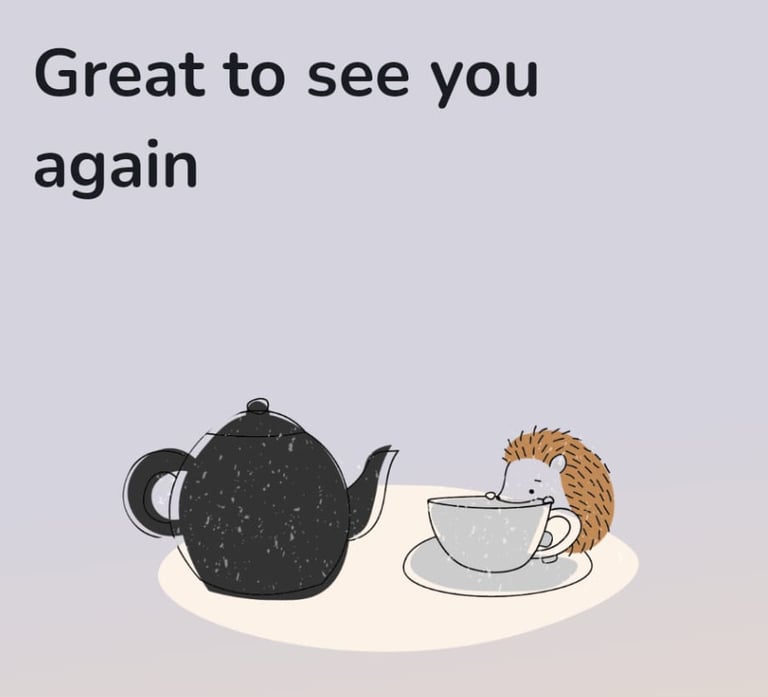
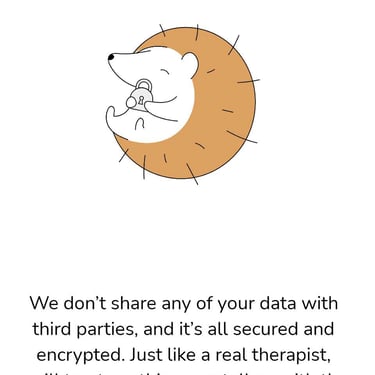
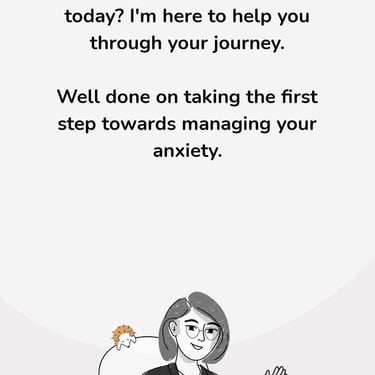
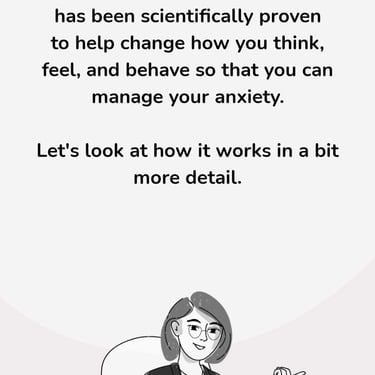
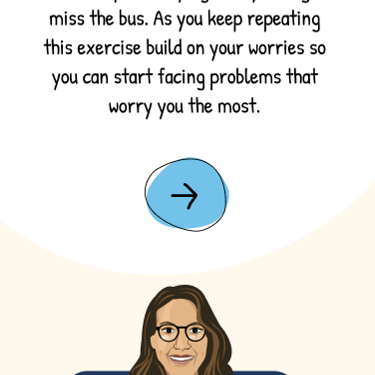
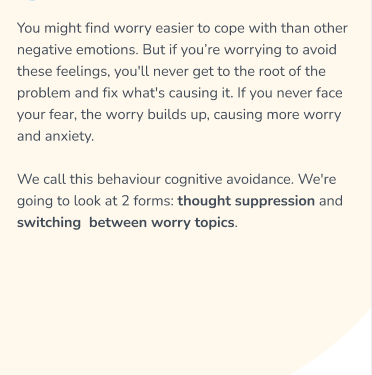
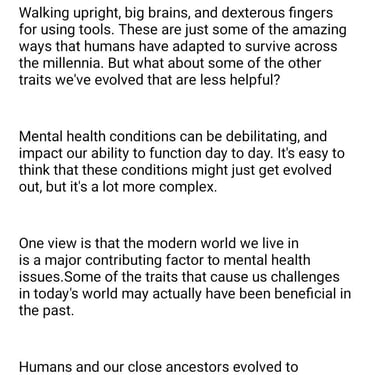
The challenges
Creating content for a healthcare app was a new challenge for me. All the content had to be clinically accurate, and follow recognised therapy pathways. But it also needed to work for users in a self-guided context, without the support of a therapist.
Helping users to understand the medical aspect of their condition, while making the app engaging and easy to user meant treading a fine balance tonally.
The process
Because this was a startup early in its journey, I worked with the team fully remotely, and asynchronously. After a few initial meetings with the UX team and the clinical psychologists working on the project, I was given access to the Figma files and worked directly with the product owner to ensure content was aligned.
My process involved drafting offline in Markdown to sketch out the content, then pasting into Figma with comments on where the UX needed adjustments. I'd then take any comments on the content and make amends to my offline files before updating on Figma. This approach allowed me to check spellings and readability offline without creating too much noise for the UX and dev team.
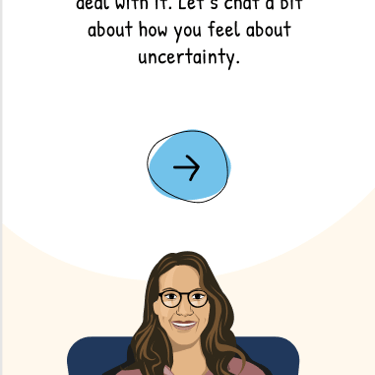
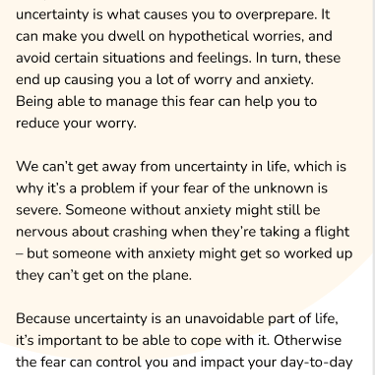
As the app was based on recognised treatment pathways, there was plenty of source material to draw from. However, translating this into content that users could follow themselves and get positive outcomes from was a daunting prospect. Working with the UX team, we settled on a design that mixed factual exposition screens with conversational therapist screens that provided guidance, encouragement, and reassurance. This split in content types created a tension in the voice and tone, so when I expanded their style guidelines I defined two separate voices – one for the therapist avatar, and one for the informational materials. This helped to foster trust in the content, while keeping users engaged.
Once I'd completed a first draft, the whole journey was reviewed with the clinical psychologists. Their feedback helped to ensure users would get positive outcomes, making the app a realistic alternative to CBT.
The outcome
The Cerina app has since been adopted by several NHS trusts and corporate wellness programmes. It has been expanded to cover six different self-guided CBT courses.
Connect with me on LinkedIn